Why Buddhists Leave Lotus Flowers at Temples: Key Points
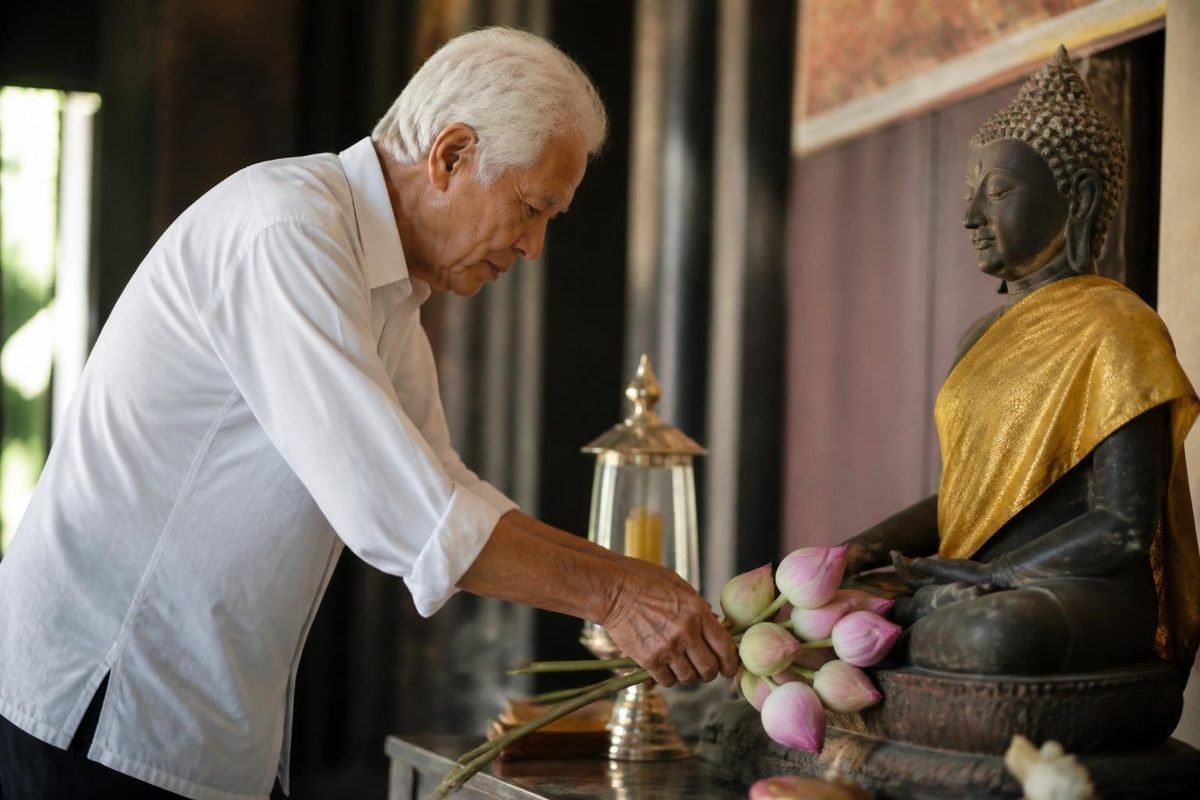
Lotus flowers are offered at Buddhist temples to show respect and devotion to the Buddha and his teachings. Their growth from muddy water into an open bloom is also a familiar image of wisdom and spiritual development amid life’s difficulties.
What a lotus can symbolize
The lotus has a long-standing place in Buddhist art and teaching. Buddhist images often depict the Buddha and other enlightened figures seated or standing on a lotus. The flower is associated with purity and awakening, and placing a real one on an altar gives that image a simple, physical presence.
The muddy water is an important part of the symbolism. The plant grows up through it, but the flower opens above the surface. Many Buddhists see this as a reminder that people can develop understanding and compassion while facing confusion, suffering and the ordinary problems of human life. The image does not suggest that difficulties disappear; it points instead to the possibility of growth within them.
There is no single meaning that every Buddhist or community must attach to a lotus. A person may offer one to express gratitude or reverence, to reflect a wish to develop good qualities, or to convey several of these intentions together. Customs and interpretations vary between Buddhist communities.
Reasons for giving flowers
Flowers are a traditional way to show respect at a temple. They may be set before a Buddha image or placed on an altar with other offerings. Making the offering can also give the person a chance to stop briefly and pay attention to their intentions.
The short life of a fresh flower is part of its significance. As its petals fade and fall, the change can remind visitors of impermanence, an important Buddhist teaching. Even a beautiful flower does not remain as it is. Watching it change offers a quiet, direct reminder that living things are subject to change over time.
A lotus offering may bring together several ideas:
- Respect: Giving the flower expresses reverence.
- Purity: The bloom above muddy water can suggest the possibility of spiritual growth.
- Impermanence: The flower’s fading makes change visible.
- Mindfulness: Placing an offering can be a deliberate moment of attention.
Lotuses are not the only flowers used in Buddhist temples. What people bring can depend on what is available locally and on the customs of a particular temple. Some altars have other kinds of fresh flowers instead.
Common questions about temple offerings
Must visitors bring a lotus to a Buddhist temple?
No. Visitors are not generally expected to bring an offering just to enter a temple. Practices differ, so pay attention to any instructions displayed and to the way others act. If you want to bring flowers, ask the temple beforehand what would be appropriate. That is a considerate way to check its customs.
Is a lotus’s colour important?
Different lotus colours can carry symbolic associations in Buddhist art and traditions. Their meaning depends on the setting and the tradition involved. It is better not to assume that a particular colour means the same thing to every temple or visitor.
More to read: online flower ordering tips